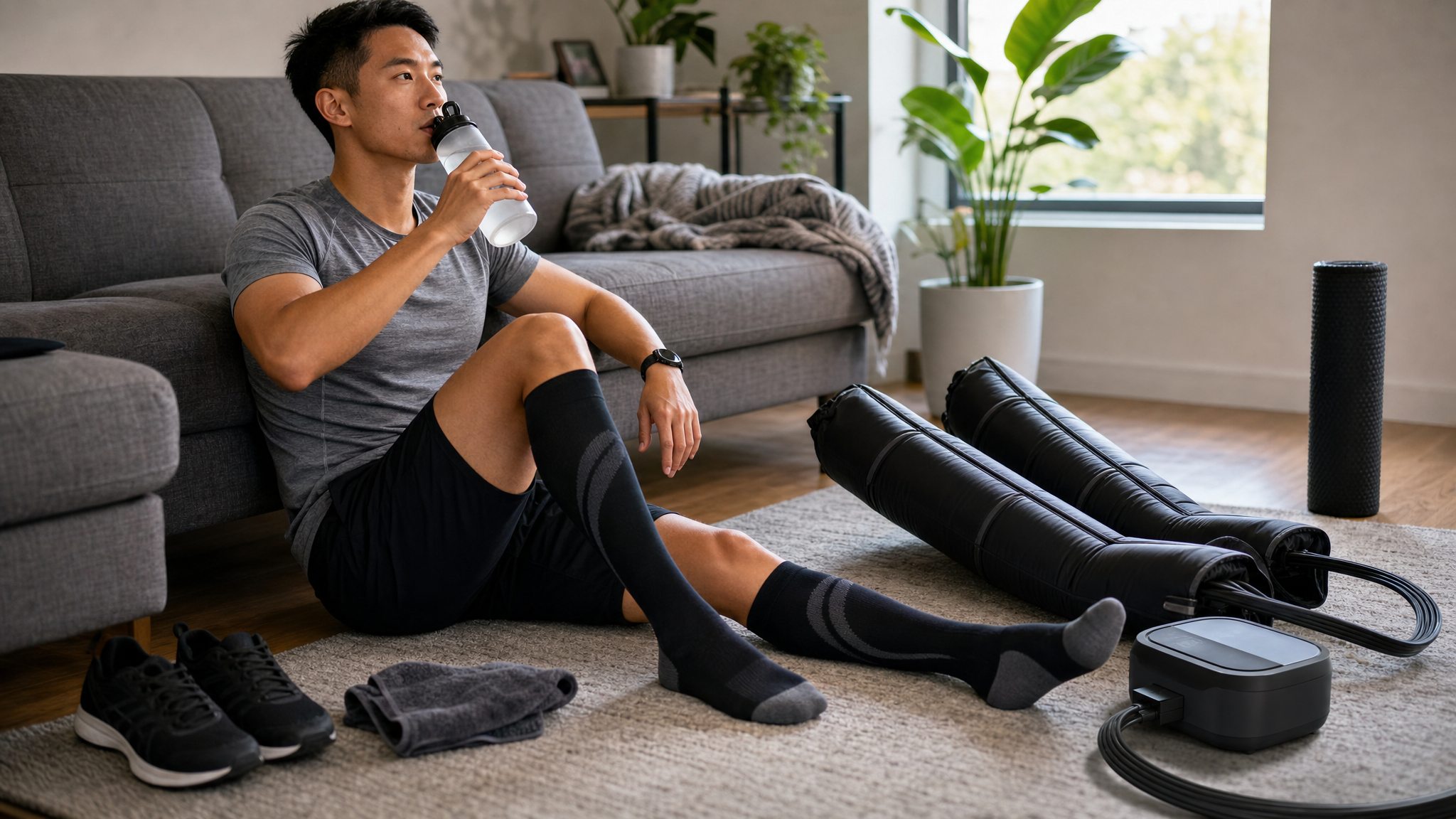
The Becauze take
The reason this matters
Choose compression socks when portability, low setup and a lower upfront price matter most; consider recovery boots when you want adjustable, at-home pneumatic sessions covering more of the leg and accept greater cost, equipment and fit considerations.
At a glance
What to know first
- Compression socks offer the simplest setup, lowest listed price and strongest portability advantage in this comparison.
- Recovery boots provide adjustable pneumatic sessions and, depending on the model, heat, vibration, targeted zones and full-leg coverage.
- The supplied listings show prices of $19.99 for Tekubig socks, $109.99 for MEKZU boots and $199.99 for RNATFLU boots; prices can change.
- Fit matters: verify sock sizing or measure leg dimensions for boots before ordering.
- Treat manufacturer recovery and circulation statements as product claims, not proof of medical benefit.
Featured products
Shop the products mentioned


Prices, sellers and availability can change. Each link opens the corresponding product at the retailer shown on the card.
Decision guide
At-a-glance comparison
| Option | Listed price | Coverage or format | Controls and setup | Best fit for | Where to check |
|---|---|---|---|---|---|
| Tekubig graduated compression socks | $19.99 | Knee-high wearable sock; 20–30 mmHg listed compression | No powered setup; portable | Runners prioritizing simplicity, travel and lower upfront cost | Check on Amazon ↗ |
| MEKZU air compression leg massager | $109.99 | Adjustable boots for calves and feet; listed fit ranges provided | Six modes, three vibration settings, three intensity levels, heat and 20-minute auto shut-off | Home users wanting customizable sessions without the higher listed boot price | Check on Amazon ↗ |
| RNATFLU air compression leg massager | $199.99 | Full-leg foot-to-thigh coverage; Small, Medium and Large listed | Five-chamber sequential compression, six modes, 11 intensity levels, heat and pressure sensing | Users seeking broader coverage and more detailed fit and intensity adjustment | Check on Amazon ↗ |
| TriggerPoint Grid 1.0 Foam Roller | $39.95 | 13-inch active rolling tool | Manual use; multi-density surface | Runners who want targeted self-massage rather than passive compression | Check on Amazon ↗ |
The practical difference between the two formats
Compression socks are wearable garments that apply graduated pressure along the leg. They are easy to pack, can be worn during everyday activities and require no controller, charging routine or dedicated recovery session. The verified Tekubig option is listed at $19.99 and is described as a knee-high, 20–30 mmHg graduated-compression sock with a nylon, spandex and polyester blend. Its listing also describes reinforced heel and toe areas and a moisture-wicking, seamless design.
Pneumatic recovery boots are powered equipment. Air chambers inflate and release in cycles, usually while the wearer is seated or resting. That makes them less spontaneous than socks, but more adjustable. The verified MEKZU model is listed at $109.99 and offers air compression, heat, six massage modes, three vibration settings, three intensity levels and a 20-minute automatic shut-off. The RNATFLU model is listed at $199.99 and describes sequential five-chamber compression from the feet to the thighs, six massage modes, 11 intensity levels and optional heat.
Portability and setup favor socks
For runners moving between work, travel, training and race-day activities, socks have the simpler routine. The Tekubig listing describes them as lightweight and portable, with use cases that include sports, travel, work and home. They can be put on without finding an outlet or setting aside a seated session.
Boots are more involved. The MEKZU product uses adjustable Velcro straps and includes an extension piece; its listed fit range covers calf circumferences from 11.8 to 27.6 inches and foot lengths from 7.9 to 11.8 inches. RNATFLU uses a zip-on design and includes a storage bag, but its listing still tells shoppers to review the size chart and measure leg length, calf circumference and thigh circumference. That is useful preparation, not a guarantee of fit.
Coverage, control and comfort tradeoffs
A knee-high sock is a relatively focused option for the lower leg and foot. Its gradual-compression design may appeal to someone who wants a wearable layer rather than a separate recovery device. However, the supplied evidence does not establish that the sock will feel comfortable for every runner, remain in place for every leg shape or address a particular medical condition. Fit, pressure tolerance and the ability to put on a snug garment are all personal considerations.
Boots provide more control over a recovery session. MEKZU describes adjustable intensity, vibration and heat, while RNATFLU describes full-leg coverage, targeted zones, pressure sensing and 11 intensity levels ranging from 50 to 150 mmHg. Those settings can make boots more customizable, but more settings do not automatically mean better results. Heat, stronger pressure or a longer session may not suit everyone, so a buyer should start with the product instructions and personal comfort rather than assume the highest setting is preferable.
Cost and the value of a repeatable routine
Based on the supplied Amazon listings, the Tekubig socks cost $19.99, the MEKZU boots cost $109.99 and the RNATFLU boots cost $199.99. These are current listed prices in the supplied evidence, not a promise that prices will remain unchanged. The products are not equivalent purchases: socks are a low-cost wearable, while boots add an electronic control system, air chambers and, depending on the model, heat and other settings.
The best value depends on whether the product will become a routine. Socks may make more sense for a runner who wants a compact option that fits into travel or daily wear. MEKZU is the more approachable boot option by listed price and includes several adjustable features. RNATFLU is the more feature-heavy choice for someone specifically interested in foot-to-thigh coverage, multiple pressure levels and a size-based fit system. A runner who rarely uses recovery equipment may find the simpler format easier to keep using.
Where a foam roller fits
Neither socks nor boots replaces every recovery tool. The verified TriggerPoint Grid 1.0 Foam Roller is listed at $39.95 and is described as a 13-inch, multi-density roller with a three-dimensional surface and a hollow, firmer EVA-foam construction. Its role is different: it supports targeted self-massage and rolling rather than passive compression.
That distinction may help runners build a routine around the problem they are trying to solve. Socks are the most portable compression choice; boots provide a guided pneumatic session; the foam roller requires active movement and lets the user target selected areas. The supplied evidence does not prove that one approach is superior for recovery, pain, circulation or performance, so the choice should remain practical and based on comfort and routine.
What to check before buying
First, decide whether you want something wearable or a dedicated session. Then check fit information carefully. For socks, look for the seller’s sizing instructions and confirm that the stated compression level and knee-high format match your preferences. For boots, measure the requested leg areas and confirm whether the product reaches the foot, calf, knee and thigh as advertised.
Next, consider the environment. A boot with heat, vibration and many modes may be most useful at home, while a sock is easier to take to training or travel. Finally, review safety and health guidance before using compression products, particularly if you have a diagnosed circulation issue, unexplained swelling, significant pain or another condition for which compression or heat may require professional advice. Product feature claims are not independent medical evidence.
Explore more options on Amazon
For a more focused starting point, search Amazon for Graduated compression socks for runners or Pneumatic compression recovery boots for legs. Refine the results to suit your needs, and check the exact model, seller, current price and return terms before choosing. Search results change and are not individually vetted recommendations.
Before you buy
What to verify
- Prices and availability are subject to change on Amazon.
- Product features come from manufacturer or listing claims and are not independent testing results.
- The supplied evidence does not establish medical efficacy, guaranteed recovery, treatment benefits or superiority between formats.
- Individual fit, comfort and tolerance may vary.
- Readers with medical conditions, unexplained swelling, significant pain or circulation concerns should seek appropriate professional guidance before using compression or heat.
Reader questions
Frequently asked questions
Neither is established as universally better by the supplied evidence. Socks are more portable and simpler, while boots offer adjustable pneumatic sessions and broader coverage.