The Becauze take
The reason this matters
Hard-shell luggage is the more natural fit when overhead-bin protection is the priority, while soft-sided luggage is the better direction for travelers who value flexible packing and quick access to items outside the main compartment. Weight, handle and wheel design, airline limits, and the way you pack can change the decision.
At a glance
What to know first
- Hard shell is the better starting point when overhead-bin protection and a defined case shape matter most.
- Soft sided is the better starting point when exterior access and flexible packing matter most.
- Construction does not determine maneuverability by itself; compare wheels, handles, dimensions, and empty weight.
- Use Amazon’s hard-shell and soft-sided carry-on search destinations for discovery, but verify each individual listing before purchase.
- Check current airline size and weight rules before treating any carry-on as flight-ready.
Featured products
Shop the products mentioned


Prices, sellers and availability can change. Each link opens the corresponding product at the retailer shown on the card.
Decision guide
Hard-shell or soft-sided: which tradeoff fits?
| Decision factor | Hard-shell starting point | Soft-sided starting point | What to verify | Where to check |
|---|---|---|---|---|
| Overhead-bin protection | Prioritize a rigid outer construction | Consider whether flexible construction meets your protection needs | Packed dimensions and closure design | Check on Amazon ↗ |
| Packing flexibility | Prefer a defined case shape | Prefer adaptable packing space | Interior layout and how the bag behaves when full | Check on Amazon ↗ |
| Exterior access | Check whether the design provides the access you need | Look for useful exterior pockets | Pocket placement, closure quality, and security | Check on Amazon ↗ |
| Weight | Compare the listed empty weight carefully | Compare the listed empty weight carefully | Weight allowance after the bag itself is counted | Check on Amazon ↗ |
| Crowded-airport maneuverability | Evaluate wheels and handle rather than assuming | Evaluate wheels and handle rather than assuming | Wheel configuration, handle information, and dimensions | Check on Amazon ↗ |
Start with the airport problem you are trying to solve
Holiday flights put several carry-on priorities in tension. A bag may need to fit into a crowded overhead compartment, protect its contents, hold everything required for the trip, and remain manageable while moving through a busy terminal. No construction wins every category automatically.
The most useful first question is not “Which type is best?” It is “What are you most likely to regret?” If you would be most concerned about belongings being pressed or bumped in an overhead bin, start with hard-shell options. If you would be more frustrated by limited access or a rigid packing shape, start with soft-sided options.
The comparison should stay separate from a general carry-on-size guide. Before buying, confirm the airline’s current cabin-bag dimensions and weight rules, then evaluate whether the bag’s own construction leaves enough practical capacity for your packing style.
When a hard shell may be the better alternative
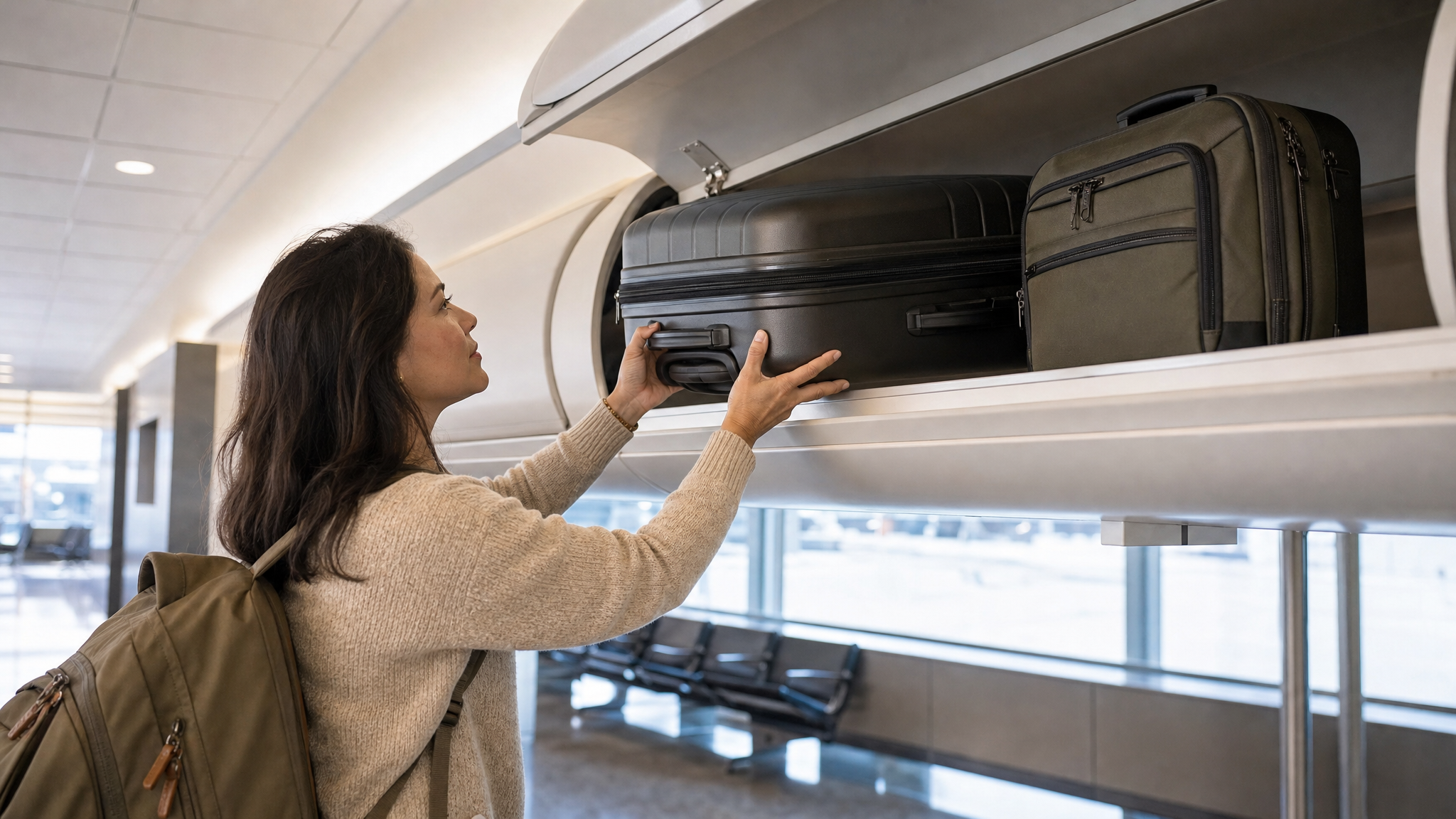
A hard-shell carry-on is the more direct choice for a traveler who places overhead-bin protection at the top of the list. Its rigid construction is also relevant when you prefer a defined case shape rather than a flexible exterior that can change as the contents change.
That preference can be especially useful for travelers carrying items they want kept inside a structured case. However, protection is only one part of the decision. A hard shell still needs to meet the airline’s size and weight rules, and its actual usability depends on details such as wheel layout, handle design, opening style, and interior organization.
For discovery, the Amazon category labeled “hard shell carry on suitcase with spinner wheels” can help you review current options. Treat it as a shopping destination rather than a recommendation: compare listed dimensions, empty weight, wheel and handle information, closure design, and the seller’s current return details before choosing a model.
When soft-sided luggage may suit you better
Soft-sided luggage is the more natural alternative for travelers who want packing flexibility and exterior access. A flexible case can be appealing when you expect to add a last-minute layer, need to reach travel documents or accessories without fully unpacking, or prefer outside pockets for items used during transit.
That convenience comes with tradeoffs to examine. Exterior pockets may make access easier, but they can also affect how you organize items and how much the bag is carrying outside its main compartment. A soft-sided bag should therefore be assessed by its pocket layout, closure quality, structure when packed, and listed empty weight—not simply by the fact that it is soft.
The Amazon category labeled “soft sided carry on suitcase with exterior pockets” is useful for comparing those features. It is a discovery page, not proof that any particular model is in stock or suitable for a specific airline. Check the individual listing and current airline requirements before buying.
Packing flexibility versus overhead-bin protection
This is the central holiday-flight tradeoff. Hard-shell luggage makes more sense when you want the case itself to provide a consistent outer structure. Soft-sided luggage makes more sense when the ability to use exterior pockets or accommodate flexible packing matters more.
Your packing habits can settle the question. Travelers who pack a defined wardrobe and want belongings enclosed in a structured case may prefer to begin with hard-shell models. Travelers who separate items by access frequency—such as documents, chargers, or a layer for the terminal—may prefer a soft-sided design with useful exterior storage.
Neither construction eliminates the need to pack carefully. Check whether the interior layout supports your items, whether the closure can be operated comfortably when full, and whether the packed case remains within the airline’s limits. If you use organizers, remember that they can improve separation without changing the luggage’s outer construction.
Weight and maneuverability deserve their own check
A carry-on’s construction is only one contributor to how it feels in motion. For a holiday trip, compare each listing’s stated empty weight, wheel configuration, handle information, and overall dimensions. A bag that seems appealing on protection or access may be less suitable if its empty weight leaves less allowance for your belongings.
Crowded-airport maneuverability is another practical consideration. Look for clearly stated wheel and handle specifications, then think about how often you will turn, stop, or pull the bag through tight spaces. Do not assume that a hard shell or a soft side automatically maneuvers better; the listing’s hardware details matter.
Also consider where the bag will travel. If you expect to place it in an overhead bin, prioritize the packed dimensions and lifting comfort. If you expect to combine it with a personal item, check how its handle and exterior shape interact with that second bag.
A useful decision rule for late-October travel
Choose hard shell first if your strongest concern is keeping the case’s shape and prioritizing protection in a crowded overhead compartment. Then verify weight, dimensions, opening style, wheel details, and the space available for your packing system.
Choose soft sided first if quick exterior access and packing flexibility are more important than a rigid exterior. Then verify pocket placement, structure when packed, empty weight, dimensions, and whether the contents remain secure when the bag is full.
If you are undecided, compare one hard-shell option and one soft-sided option using the same checklist rather than comparing brand names alone. The better choice is the one that solves your most likely travel problem without creating an airline-compliance problem.
Explore more options on Amazon
For a more focused starting point, search Amazon for hard shell carry on suitcase with spinner wheels or soft sided carry on suitcase with exterior pockets. Refine the results to suit your needs, and check the exact model, seller, current price and return terms before choosing. Search results change and are not individually vetted recommendations.
Before you buy
What to verify
- No specific hard-shell carry-on model was supplied as a verified product recommendation.
- The supplied evidence does not establish universal weight, protection, durability, or maneuverability results for either construction type.
- Search destinations do not verify a particular product’s current stock, dimensions, price, rating, or airline compliance.
- Airline cabin-bag rules can vary and should be checked directly before travel.
- Any listed product details, prices, or availability should be rechecked at the time of purchase.
Reader questions
Frequently asked questions
It may be the better fit if your priority is overhead-bin protection and a consistently structured case. It is not automatically better for weight, access, or maneuverability, so compare those details in the individual listing.