The Becauze take
The reason this matters
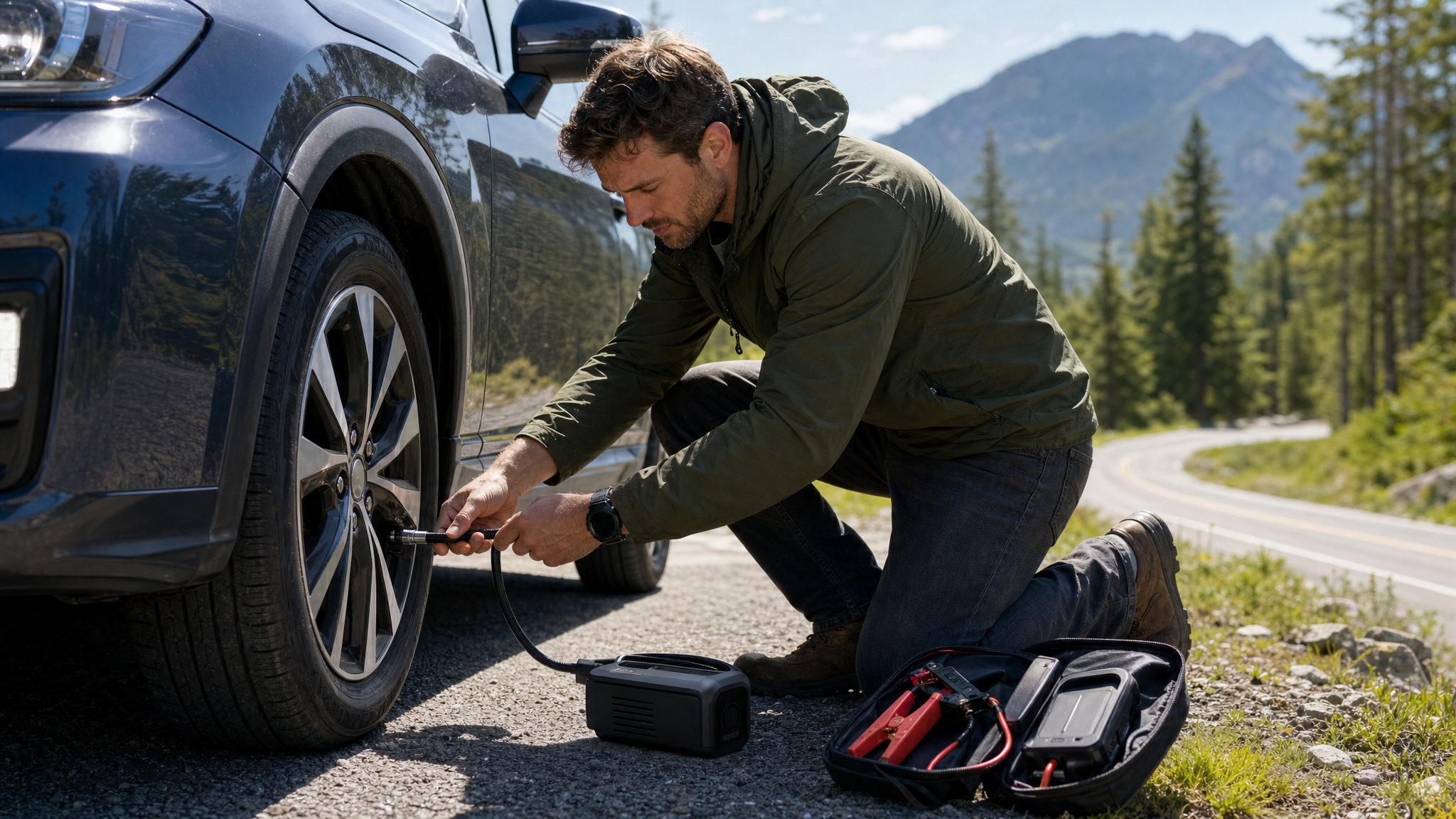
Choose a portable inflator first if gradual tire-pressure loss is your more likely problem and you already have dependable battery support. Choose a jump starter first if a dead battery would leave you stranded, especially when the added air-compressor and charging functions are useful. The all-in-one option covers more scenarios but costs more and creates more battery-maintenance requirements.
At a glance
What to know first
- An inflator restores tire pressure; it does not start a vehicle with a dead battery.
- A jump starter addresses a no-start event and the featured fejidaw model also lists an air compressor and USB-C output.
- The GJOSYOI dedicated inflator is listed at $29.99; the fejidaw all-in-one jump starter is listed at $79.98.
- The jump starter’s listing advises charging every three months during long periods of nonuse.
- Verify charging, runtime, vehicle compatibility and safety instructions before relying on either device.
Featured products
Shop the products mentioned


Prices, sellers and availability can change. Each link opens the corresponding product at the retailer shown on the card.
Explore the category
Browse the relevant Amazon categories
Category rankings, selection, prices and availability can change on Amazon.
Decision guide
Portable inflator vs. jump starter with compressor
| Consideration | GJOSYOI portable inflator | fejidaw jump starter with compressor | Where to check |
|---|---|---|---|
| Listed price | $29.99 | $79.98 | Check on Amazon ↗ |
| Primary roadside job | Adding air to tires and other inflatables | Jump starting a vehicle, plus inflation | Check on Amazon ↗ |
| Listed inflation features | 36L/min claim, 180 PSI maximum, LCD, automatic stop and preset modes | 45L/min claim, 160 PSI, automatic stop and preset modes | Check on Amazon ↗ |
| Battery and charging features | Cordless; 5V/2A USB input/output listed | 20,000mAh battery; USB-C 5V/2A output listed | Check on Amazon ↗ |
| Emergency lighting | Three-mode LED light | White, flashing and SOS light modes | Check on Amazon ↗ |
| Maintenance detail supplied | Recharge interval not provided in the supplied evidence | Listing advises charging every three months during long-term nonuse | Check on Amazon ↗ |
| Best fit | Drivers prioritizing tire-pressure support | Drivers prioritizing dead-battery backup and multi-function coverage | Check on Amazon ↗ |
The first decision: Which failure would stop your trip?
A portable tire inflator is designed for a tire that needs air. That can be useful after a temperature change, before a long drive, or when a tire is losing pressure gradually. It does not address a discharged vehicle battery, and using it cannot substitute for diagnosing a puncture or other tire damage.
A jump starter is designed for a different failure: a vehicle that will not start because its battery is depleted. The jump starter may be the higher-priority tool for drivers with older vehicles, infrequent use, repeated short trips, or a history of battery trouble. However, a jump starter is not a repair for a failing battery or charging system.
The choice is therefore not simply inflator versus jump starter on features. It is tire-pressure risk versus no-start risk. If both problems matter, an all-in-one jump starter with an air compressor can reduce the number of devices you carry, but it also adds cost and another rechargeable battery to maintain.
Option one: a dedicated portable inflator
The verified GJOSYOI Tire Inflator Portable Air Compressor is listed at $29.99 on Amazon and is shown as in stock in the supplied product data. Its listed features include a cordless design, an LCD display, automatic stop at a selected pressure, and four preset modes for bikes, motorcycles, cars and balls. It supports PSI, KPA, BAR and kg/cm² readings, along with a manual mode.
For a driver who mainly wants pressure support, those controls address the most important usability questions: Can the device show pressure? Can it stop at a target? Can it handle more than one type of inflation task? The product also lists a 36L/min inflation rate and a maximum pressure of 180 PSI. Those are manufacturer-provided claims, not independent test results, so real-world inflation time and noise should be verified through the listing and manual.
The inflator also includes a three-mode LED light and a 5V/2A USB input/output that can act as a spare power bank. Those features may help during roadside use, but they do not turn the device into a jump starter. Before buying, verify how the cordless unit is charged, how long its battery takes to recharge, and whether its operating procedure matches your vehicle’s tire-pressure needs.
Option two: a jump starter with an air compressor
The verified fejidaw 6000A Jump Starter with Air Compressor is listed at $79.98 on Amazon and is shown as in stock in the supplied product data. Its primary job is jump starting, with listed support for vehicles up to 10L gasoline or 8L diesel engines. It also includes a 160 PSI air compressor, preset inflation modes, an LED display, automatic stop, jumper cables, an air hose and three nozzles.
The device lists a 20,000mAh battery, USB-C 5V/2A output, and lighting modes that include white light, flashing light and SOS. It is presented as a combined jump starter, inflator and portable charging device. Its listed protections include reverse connection, fire prevention and overcurrent protection. These are product claims; users should still follow the manual carefully when connecting jumper cables.
The broader feature set is the main reason to choose this format. One device can address a no-start event, add air to a tire and provide phone or small-device charging. The tradeoff is that the device is more expensive than the dedicated inflator and depends on maintaining enough charge for the jump-start function. The listing specifically advises charging it every three months when it is not used for a long period.
Storage and charging should shape the choice
Both options are rechargeable roadside devices, so storage is part of the purchase decision rather than an afterthought. A tool left in a garage may be easier to remember and recharge than one buried in a trunk. A tool carried year-round should be protected from damage and checked before a long trip.
The jump starter has a clearly stated maintenance instruction: charge it every three months during extended periods of nonuse. Its listed operating range is -4°F to 140°F, but that is a manufacturer-provided claim and should not be treated as a guarantee of performance in every storage condition. The supplied information does not state a recharge interval for the GJOSYOI inflator, so buyers should verify that detail before relying on it as an emergency tool.
Also check connection and accessory requirements. The dedicated inflator’s product information describes USB input/output but does not provide a complete charging-time or runtime specification. The jump starter lists its battery capacity and includes jumper cables, but the supplied evidence does not establish how many vehicle starts or tire inflations it can deliver per charge.
Which tool fits common driving patterns?
For routine tire-pressure management, the GJOSYOI inflator is the more focused choice. It is the lower-priced option in this comparison and concentrates on pressure readings, preset modes and automatic stopping. It may suit a driver who wants a compact pressure tool and already has another plan for a dead battery.
For broader roadside preparedness, the fejidaw jump starter is the more capable choice on paper. It combines jump-starting with inflation and device charging, making it relevant when a dead battery is a more serious concern than ordinary pressure loss. Its higher listed price buys additional functions, not proof that it will outperform a dedicated inflator in every inflation task.
If you are choosing for a road trip, inspect your existing equipment first. You may not need another inflator if your vehicle already carries one, and a jump starter does not remove the need to inspect tires for damage. If you have neither tool, prioritize the failure scenario most likely to interrupt your plans, then verify the product’s instructions, charging method and compatibility before purchase.
Where to browse beyond these two examples
Amazon’s Wheel & Tire Air Compressors & Inflators category is the relevant discovery destination for dedicated tire-pressure tools. The Tire & Wheel Tools category may help readers compare related roadside equipment, while Jump Starters & Battery Chargers is the better place to explore dedicated battery-support devices. These are shopping destinations, not additional verified product recommendations, so check each listing’s vehicle compatibility, charging instructions, included accessories and current availability before buying. Amazon prices and availability can change after this comparison was prepared.
paragraphs_extra_note_do_not_use
Explore more options on Amazon
To explore beyond the featured picks, browse Wheel & Tire Air Compressors & Inflators and Tire & Wheel Tools on Amazon. These categories let you compare the wider selection and narrow your options by the features, dimensions and budget that matter to you. Category placement is not an endorsement of every listing.
For a more focused starting point, search Amazon for portable 12V digital tire inflator for cars or portable lithium-ion car jump starter. Refine the results to suit your needs, and check the exact model, seller, current price and return terms before choosing. Search results change and are not individually vetted recommendations.
Before you buy
What to verify
- Inflation rates, pressure limits, protection features, operating ranges and compatibility details are manufacturer-provided claims, not independent test results.
- The supplied evidence does not provide runtime, recharge time, number of jump starts per charge or number of inflations per charge.
- A tire inflator does not establish that a puncture or other tire damage is repaired.
- Prices and availability can change after the supplied product capture.
- Read and follow each product’s safety and operating instructions before use.
Reader questions
Frequently asked questions
A portable inflator adds air to a tire. A jump starter supplies power to help start a vehicle with a depleted battery. They address different roadside failures.