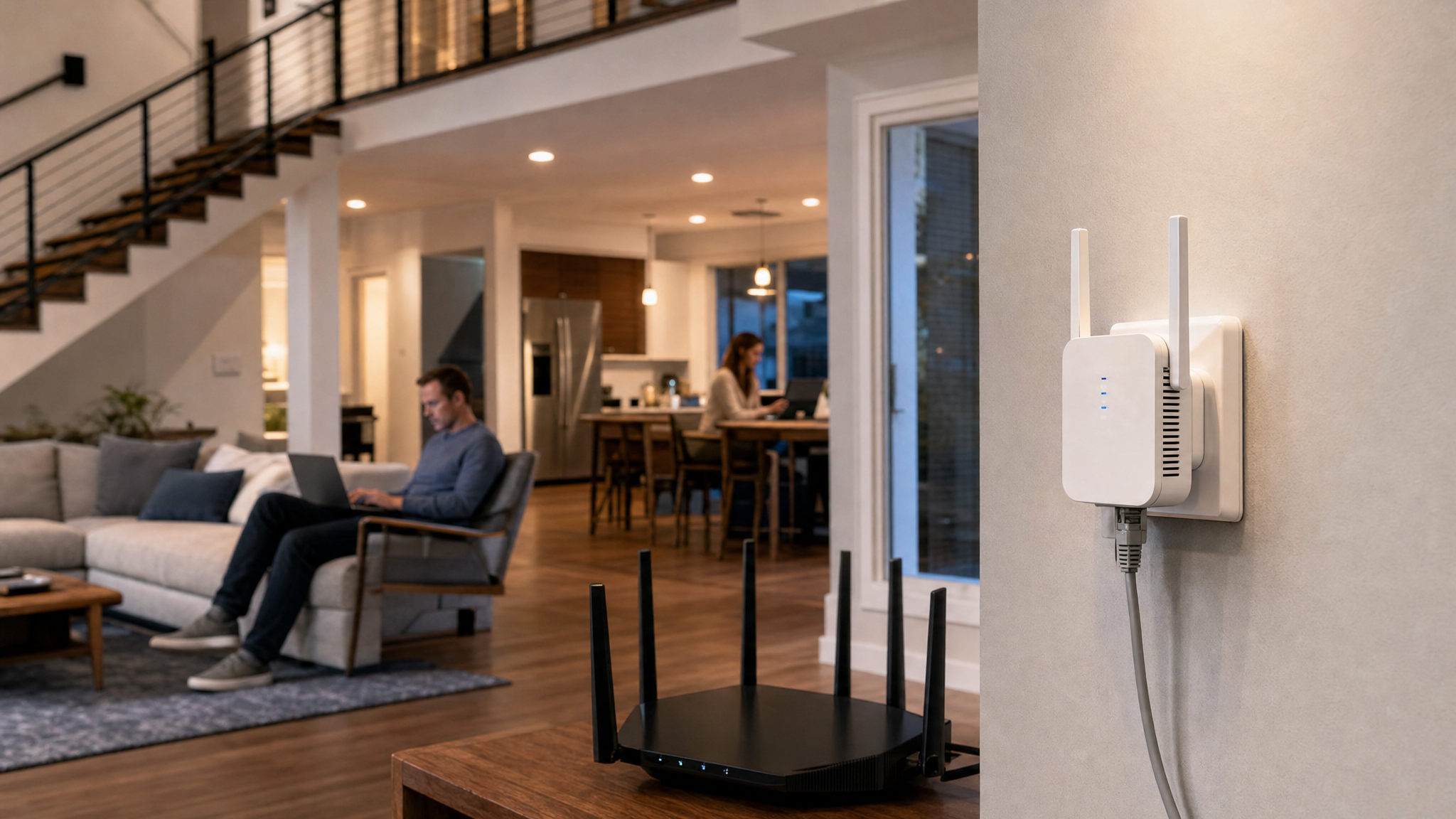
The Becauze take
The reason this matters
Choose an extender when the problem is a specific weak area and your existing router otherwise works well; consider mesh when you need a more comprehensive coverage plan across multiple areas. The right choice depends on the size and layout of the problem, setup expectations, device needs, and whether you can use Ethernet.
At a glance
What to know first
- A targeted extender is the more focused category when one or two areas are weak and the existing router works well elsewhere.
- A mesh system is worth investigating when weak coverage is distributed across multiple rooms or floors, but no specific mesh system was verified in the supplied evidence.
- The Eboous WiFi Extender Signal Booster lists an Ethernet port, five operating modes, WPS setup, and manufacturer-claimed coverage up to 15,000 square feet; these claims were not independently tested here.
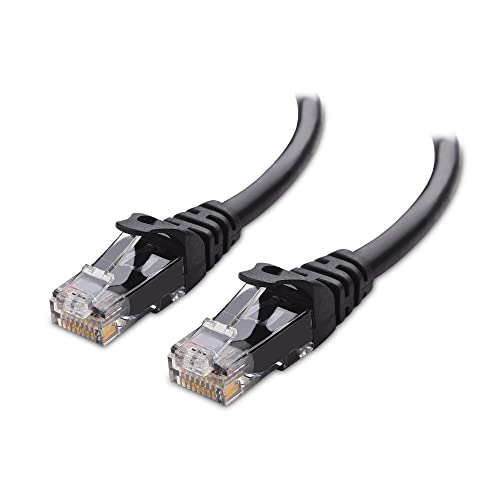
- The Cable Matters Cat 6 cable can support a wired networking approach when a 25-foot route is suitable, but it is not a wireless coverage product.
- Verify live price, availability, compatibility, seller details, return terms, and the exact technical claims before buying.
Featured products
Shop the products mentioned


](https://m.media-amazon.com/images/I/31rx5bNlDYL._SL500_.jpg)
Prices, sellers and availability can change. Each link opens the corresponding product at the retailer shown on the card.
Explore the category
Browse the relevant Amazon categories
Category rankings, selection, prices and availability can change on Amazon.
Decision guide
Extender or mesh: a decision framework
| Consideration | Targeted extender | Mesh system | Where to check |
|---|---|---|---|
| Best starting point | One or a small number of weak areas | Several weak areas across the home | Check on Amazon ↗ |
| Network approach | Adds coverage to an existing router | Evaluated as a broader, coordinated home-network setup | Check on Amazon ↗ |
| What to verify | Router compatibility, placement, operating modes, Ethernet, security | Unit count, compatibility, management method, expansion, and coverage fit | Check on Amazon ↗ |
| Evidence in this guide | Eboous WiFi Extender Signal Booster is a verified product option | No specific mesh system was verified; use the “mesh wifi 2 pack” search for discovery | Check on Amazon ↗ |
| Possible wired role | An Ethernet port may help connect compatible equipment | A separate wired path may be useful where the system supports it | Check on Amazon ↗ |
| Main uncertainty | Advertised range and speed may not match a particular home | Exact features and suitability depend on the specific system selected | Check on Amazon ↗ |
Start with the shape of the dead zone
The first question is not which product has the largest advertised coverage area. It is whether your home has one troublesome room or a broader pattern of weak service. A single bedroom, office, basement, or backyard edge may be a better match for a targeted extender. Several weak areas spread across floors or distant parts of the home may justify investigating a mesh system instead.
Before shopping, note where the connection becomes unreliable, which devices are affected, and whether the problem is limited to one location. This helps prevent buying a device for a coverage problem that is actually caused by router placement, walls, wiring, or an internet service issue.
Extender versus mesh: the practical tradeoff
An extender is generally the narrower intervention: it is intended to add coverage to an existing network. That can make sense when the current router performs acceptably near its normal location and only one or two areas need help. Placement matters, because the extender needs a usable connection to the existing network rather than being placed only at the furthest point of the dead zone.
A mesh system is the broader route to investigate when coverage needs to be coordinated across the home. The supplied shopping evidence does not identify a specific mesh system, so this article does not recommend a particular mesh model or claim that one is available. Instead, shoppers can use Amazon’s “mesh wifi 2 pack” search to compare current options, then verify the number of units, compatibility, management method, and included features on each listing.
The distinction is not simply extender equals inexpensive and mesh equals better. A larger system can be unnecessary for a small problem, while a single extender may not be the most convenient answer for a home with several consistently weak locations. Treat the layout, not the product category’s marketing language, as the starting point.
What the Eboous extender offers
The Eboous WiFi Extender Signal Booster is the clearest verified product match for a targeted extender approach. Its captured Amazon listing showed a current price of $69.90 and an in-stock status at capture; both can change, so verify the live listing before purchasing.
The manufacturer describes coverage up to 15,000 square feet, support for more than 65 simultaneous devices, and a one-tap WPS setup. Those are manufacturer claims rather than independent test results. The listing also identifies five operating modes—Repeater, Bridge, Access Point, Mesh, and Router—and an Ethernet port. Its stated security support includes WEP, WPA, and WPA2 encryption.
Those details make it worth considering for shoppers who want multiple configuration options or a wired connection to a device or network component. They do not establish the actual coverage or speed in a particular house. Walls, floors, router position, internet service, and client devices can all affect the result. Do not select it solely because of its advertised square-foot figure or “6X faster” language.
When Ethernet changes the decision
A wired connection can be useful when wireless performance is unreliable but running a cable is practical. The Cable Matters 10Gbps Snagless Cat 6 Ethernet Cable is a verified 25-foot cable with a captured price of $8.49. Its listing describes compatibility with routers and other LAN equipment, support for up to 550 MHz bandwidth, and support for Power over Ethernet applications.
This cable is not a mesh system or a Wi-Fi extender, and it does not solve a coverage problem by itself. Its role is to provide a wired path where the layout allows one—for example, between network equipment and a suitable access point or another wired device. Measure the complete route around furniture, walls, or equipment before buying; the product listing specifically cautions that cable length should be checked carefully.
A buying checklist before you choose
1. Map the weak spots. Record the rooms and devices affected rather than relying on a general impression of poor Wi-Fi.
2. Check the existing router. If performance is good close to the router, a targeted extender may be a reasonable first category to investigate. If the problem is widespread, compare mesh systems as a broader solution.
3. Decide whether wired networking is possible. An Ethernet run may provide a more consistent path for a compatible device or access point, but only if the route and length work.
4. Verify compatibility and controls. For an extender, check router compatibility, operating modes, security standards, Ethernet functionality, and setup method. For mesh, check the system’s unit count, compatible equipment, app or management requirements, and expansion options.
5. Treat claims as claims. Coverage, speed, device capacity, and security descriptions come from manufacturers or listings here, not independent testing. Confirm the live price, availability, seller information, returns, and technical requirements before checkout.
What to explore on Amazon—and what not to assume
The verified Eboous listing is a specific extender option, while Amazon’s “wifi extender” search is a discovery destination rather than a single recommendation. Use it to compare alternatives, but verify each product’s exact model, features, price, availability, and compatibility.
Likewise, “mesh wifi 2 pack” is a search destination, not evidence that a particular two-unit mesh product is in stock or suitable for your home. The supplied evidence also includes wall mounts for specific mesh hardware, but those are accessories rather than mesh systems. A mount should only be considered after confirming that you own the exact compatible device; it will not improve coverage on its own.
Explore more options on Amazon
To explore beyond the featured picks, browse Handheld Game Systems and Crafts, Hobbies & Home on Amazon. These categories let you compare the wider selection and narrow your options by the features, dimensions and budget that matter to you. Category placement is not an endorsement of every listing.
For a more focused starting point, search Amazon for wifi extender or mesh wifi 2 pack. Refine the results to suit your needs, and check the exact model, seller, current price and return terms before choosing. Search results change and are not individually vetted recommendations.
Before you buy
What to verify
- No specific mesh Wi-Fi system was supplied as a verified product, so the mesh side of the comparison is category guidance rather than a model recommendation.
- Coverage, speed, device capacity, interference reduction, and security statements for the extender come from the manufacturer or listing and were not independently tested.
- Prices, availability, and listing details are dynamic and should be checked before purchase.
- The supplied data has no rating, review count, seller, or recent-purchase figure for the featured products.
- Sales ranks are category-specific and should not be interpreted as purchase counts.
- Amazon search destinations are for discovery and do not establish that any particular product is available or suitable.
Reader questions
Frequently asked questions
Start by investigating an extender if the issue is limited to one area and the existing router works well nearby. Check placement and compatibility rather than assuming the advertised maximum range will apply to your home.